
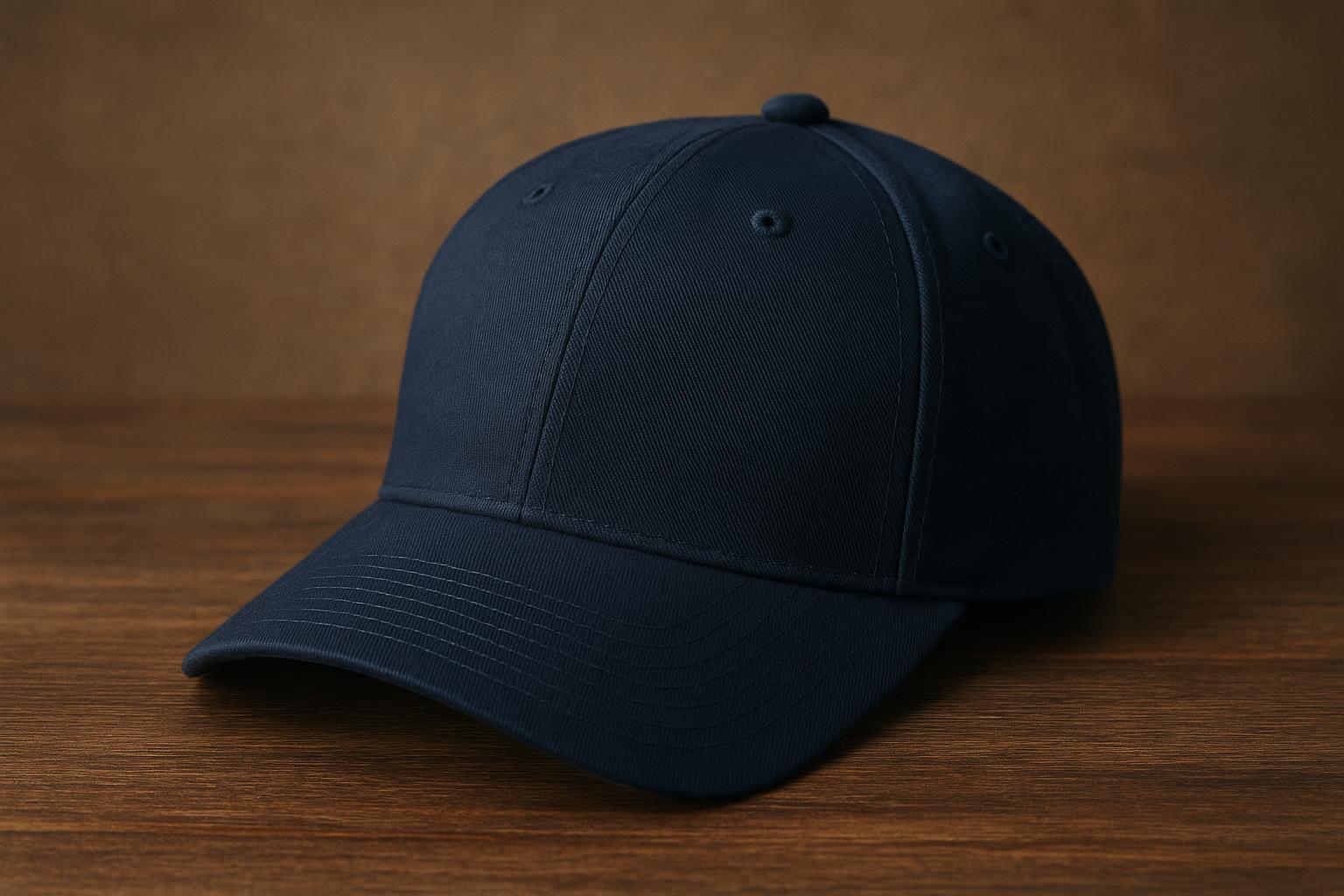
Heartbeat Brand is a purpose-driven lifestyle company founded in 2017 in South Lake Tahoe, California. Built around the idea of living with intention and passion, Heartbeat Brand has grown from a premium hat company into a broader movement centered on community, storytelling, and authentic self-expression. The brand’s core product, the baseball cap, serves as a wearable symbol of identity, with each design reflecting a cause, interest, or way of life that resonates with its audience.
Heartbeat Brand is known for its emphasis on design innovation and brand integrity, holding more than 50 registered trademarks and pursuing multiple patents. In addition to retail collections, the company offers custom and wholesale hat programs that allow organizations and individuals to bring their own concepts to life. Through charitable partnerships and cause-based initiatives, Heartbeat Brand uses apparel as a platform to foster connection and give back, aligning its products with the traditions, history, and cultural significance of the baseball cap.
How the Baseball Cap Took Its Present Form
The single-billed baseball cap has a history extending back to the mid-19th century. Established in 1845, the New York Knickerbockers were the first organized baseball club. But it was not until 1849 that the Knickerbockers gained a formal uniform, which consisted of white flannel shirts, blue wool pantaloons, and chip hats made of straw. Assisting this was Elias Howe’s 1846 patenting of the first sewing machine, which enabled the commercial production of uniforms.
The chip hats were not caps, but rather lightweight, round-brimmed creations that accomplished a primary task of keeping the face shaded. There are no known photos of the Knickerbockers in these hats, but an 1854 photo of the Yale University rowing team provides a clue. The hat brims were relatively wide and accentuated, reflecting the style of the era. This is distinct from later decades, when straw hat brims became progressively smaller and more decorative in nature.
In 1876, a New York Sun reporter visited one of the original members of the Knickerbockers in his home, describing the scene thus: “Hanging over the bed was the old original worn and tattered flag of the club, to be used as his shroud when he died…(and) two immense straw hats hung on the wall by the tattered flag.”
By 1854, the Knickerbockers’ original straw hats gave way to a mohair cap, which is documented in a 1859 group photograph that features the Knickerbockers on the left and the Brooklyn Excelsior on the right. The Knickerbockers players held their merino wool caps in their hands. These featured a single rounded visor, with the crown having a pill-box shape, flat on top.
By contrast, the Excelsior players held the first example of the classic baseball cap in their hands. These featured a dark rounded crown with button on top, divided into ribbed panels, with each section outlined by light stitching. The hats also had a single rounded bill. The visor was substantially shorter than the modern baseball cap.
Both of the teams featured in the photo were among the 16 charter members of the National Association of Base Ball Players, which was founded in 1857. Interestingly, the Knickerbockers name reflects the Dutch roots of New York City, not a style of leggings. It was not until the Cincinnati Red Stockings of 1867 that a team donned baggy knickers with their high socks, instead of pantaloons. The Knickerbocker name lives on today with the NBA Knicks.
The Excelsior-style cap was popularized by hat makers Peck & Snyder and adopted by teams across the country. However, a variety of styles and designs coexisted. This is evident in an 1888 A.G. Spalding & Bros. (Spalding) catalogue that offers 10 distinct types of cap. These included rounded-crown caps, those with a flat pillbox design, and even one with a short brim that extends all the way around the rounded crown. Among the caps’ common features were a stitched visor, ventilated crown, and perspiration-proof sweatband.
In 1894, the Boston Baseball Club (now the Atlanta Braves) started a new trend by introducing an embroidered letter. That same year, the Baltimore Orioles added the first graphic logo to a cap, with the addition of embroidered orange wings for a cup game vs. the Giants.
By the turn of the century, the rounded-crown Brooklyn-style cap dominated, with the Detroit Tigers creating an embroidered red tiger that became the first mascot cap logo. In 1903, Spalding innovated a “Philadelphia-style” baseball cap that featured reinforced semi-circular stitching on the visor. This meant that the cap held its form longer. By 1910, this eight-panel short-brim construction was standard.
The modern ball cap arrived in the 1930s and was the brainchild of German immigrant Ehrhardt Koch. Working with his sister, Koch founded the New Era Cap Co. and created a popular Gatsby-style flannel cap in the early 1920s. His first baseball caps premiered with the Cleveland Indians in 1934, and his was the first company to work individually with players in fitting their headwear. The 1954 New Era cap still defines the standard contemporary baseball cap. It features a large visor with eight rows of stitching, and a six-panel crown. It also has ventilating eyelet holes on every panel. Interestingly, the pillbox-crown cap persisted with some teams, as with the Willie Stargell-led Pittsburgh Pirates of the 1970s. By 1994, New Era was the official manufacturer of caps for all Major League teams.
About Heartbeat Brand
Heartbeat Brand is a South Lake Tahoe–based lifestyle company founded in 2017 with a focus on passion, community, and self-expression. Known for its premium hats and story-driven designs, the brand uses the baseball cap as a canvas for representing causes, interests, and personal identity. Heartbeat Brand offers retail collections, custom hat programs, and wholesale options, and supports environmental and health-focused initiatives through charitable partnerships.