
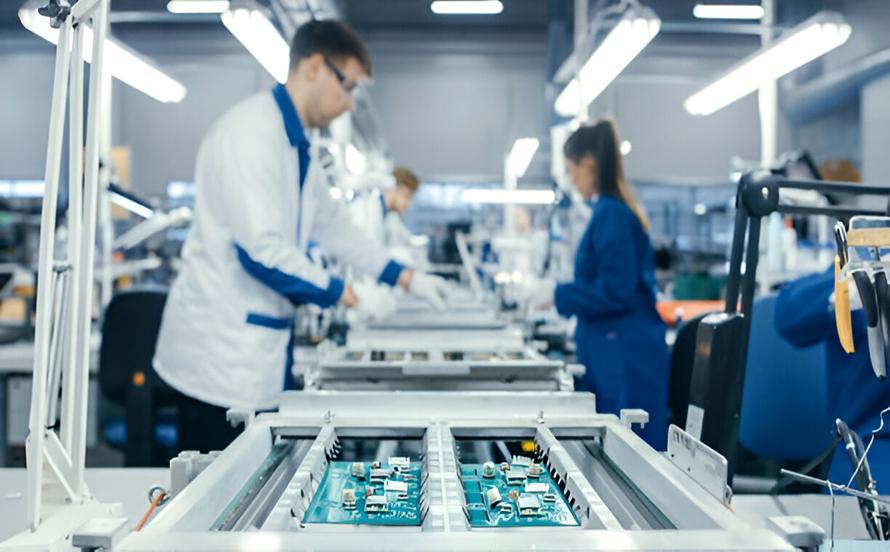
As electronic products move from prototyping to mass production, manufacturers must rely on efficient, scalable, and cost-effective manufacturing solutions. High volume PCB assembly plays a crucial role in meeting large market demand while maintaining consistent quality and performance. From consumer electronics and automotive systems to industrial controls and communication equipment, large-scale production requires precision, automation, and rigorous quality management.
To support these requirements, companies often work with experienced providers of printed circuit board assembly services that specialize in high-volume manufacturing. Understanding how high volume PCB assembly works and what to look for in a manufacturing partner helps businesses achieve reliable production at competitive costs.
What Is High Volume PCB Assembly?
High volume PCB assembly refers to the manufacturing and assembly of printed circuit boards in large quantities, typically ranging from tens of thousands to millions of units. This type of production is designed for products with stable designs and consistent demand, where efficiency, repeatability, and cost optimization are essential.
Unlike low or medium volume production, high volume assembly relies heavily on automated processes to minimize human error and maximize throughput. Standardized workflows, optimized equipment setups, and strict process controls ensure consistent results across large production batches.
High volume manufacturing is commonly used for consumer electronics, automotive modules, industrial electronics, networking equipment, and power management systems where large-scale deployment is required.
Key Benefits of High Volume PCB Assembly
One of the primary advantages of high volume PCB assembly is cost efficiency. As production volumes increase, the cost per unit decreases due to economies of scale. Automated assembly lines, bulk component sourcing, and optimized logistics contribute to lower manufacturing costs while maintaining quality.
Consistency is another major benefit. Automated placement machines and controlled soldering processes ensure uniform component placement and solder joint quality across thousands or millions of boards. This consistency is critical for maintaining product reliability and reducing field failure rates.
High volume production also enables faster time to market for large-scale product launches. Once the assembly line is fully optimized, manufacturers can produce large quantities quickly, supporting global distribution and meeting market demand without delays.
In addition, experienced manufacturers can integrate testing, inspection, and packaging into streamlined workflows, further improving efficiency and reducing overall production lead times.
High Volume PCB Assembly Process
The high volume PCB assembly process begins with thorough design verification and production planning. Manufacturers perform design for manufacturability (DFM) and design for assembly (DFA) reviews to ensure the PCB layout, component selection, and soldering requirements are optimized for large-scale production. Any design issues identified at this stage can be corrected before mass production begins, preventing costly delays later.
Component sourcing is a critical part of high volume production. Manufacturers work with authorized distributors and long-term suppliers to secure stable component availability and competitive pricing. Effective supply chain management ensures consistent quality and minimizes the risk of shortages that could disrupt production schedules.
Assembly is primarily performed using advanced surface mount technology (SMT) lines equipped with high-speed pick-and-place machines. These machines can place tens of thousands of components per hour with exceptional accuracy. Through-hole components, if required, are inserted using automated insertion machines or selective soldering processes.
Reflow soldering is carefully controlled to ensure reliable solder joints across all boards. For double-sided or complex boards, multiple reflow cycles may be used. Wave soldering or selective soldering is applied for through-hole components, depending on the design requirements.
Inspection and Testing in High Volume Production
Quality assurance is essential in high volume PCB assembly to ensure consistent performance across large quantities. Automated optical inspection (AOI) systems are commonly used to detect soldering defects, missing components, or placement errors in real time. X-ray inspection is used for complex packages such as BGAs and QFNs, where solder joints are not visible.
In-circuit testing (ICT) and functional testing verify electrical performance and ensure that assembled boards meet design specifications. Statistical process control (SPC) techniques are often applied to monitor production trends and identify potential issues before they result in defects.
By integrating inspection and testing into the production line, manufacturers can maintain high yields while reducing rework and scrap rates.
Applications of High Volume PCB Assembly
High volume PCB assembly supports a wide range of industries. Consumer electronics manufacturers rely on large-scale production to meet global demand for smartphones, tablets, wearable devices, and home appliances. Automotive electronics, including engine control units, infotainment systems, and advanced driver-assistance systems, also require high volume production with strict reliability standards.
Industrial electronics such as power supplies, motor controllers, and automation systems benefit from consistent, large-scale manufacturing. Telecommunications and networking equipment manufacturers depend on high volume PCB assembly to produce routers, switches, and communication modules for large network deployments.
As technology continues to advance, demand for high volume manufacturing of electronic devices is expected to grow across both established and emerging markets.
Choosing the Right Printed Circuit Board Assembly Services
Selecting the right provider of printed circuit board assembly services is a critical decision for successful high volume production. Manufacturers should evaluate potential partners based on their production capacity, automation level, quality certifications, and experience with similar products or industries.
Certifications such as ISO 9001, IATF 16949 for automotive applications, and IPC-A-610 compliance demonstrate a commitment to quality and process control. Advanced inspection capabilities, robust supply chain management, and strong engineering support are also important factors.
Communication and project management capabilities should not be overlooked. A reliable manufacturing partner provides clear timelines, transparent reporting, and proactive issue resolution to ensure smooth production runs.
Challenges and Risk Management
High volume production presents unique challenges, including component shortages, process variations, and quality risks. Effective risk management strategies, such as dual sourcing, preventive maintenance, and continuous process improvement, help mitigate these challenges.
Early collaboration between design teams and manufacturing partners also reduces risk by ensuring that designs are optimized for mass production. This collaboration helps prevent costly redesigns and production delays once volume manufacturing begins.
Future Trends in High Volume PCB Assembly
The future of high volume PCB assembly is closely tied to advancements in automation, data analytics, and smart manufacturing. Industry 4.0 technologies, such as real-time production monitoring and predictive maintenance, are improving efficiency and reducing downtime. Advanced inspection systems using artificial intelligence are enhancing defect detection and quality consistency.
Sustainability is also becoming a key focus. Manufacturers are adopting lead-free processes, energy-efficient equipment, and environmentally responsible materials to meet global regulatory requirements and corporate sustainability goals.
Conclusion
High volume PCB assembly is essential for producing electronic products at scale while maintaining consistent quality and cost efficiency. By leveraging automation, advanced inspection systems, and optimized supply chains, manufacturers can meet large market demands with confidence. Partnering with experienced providers of printed circuit board assembly services ensures reliable production, reduced risk, and long-term success in today’s competitive electronics manufacturing landscape.