
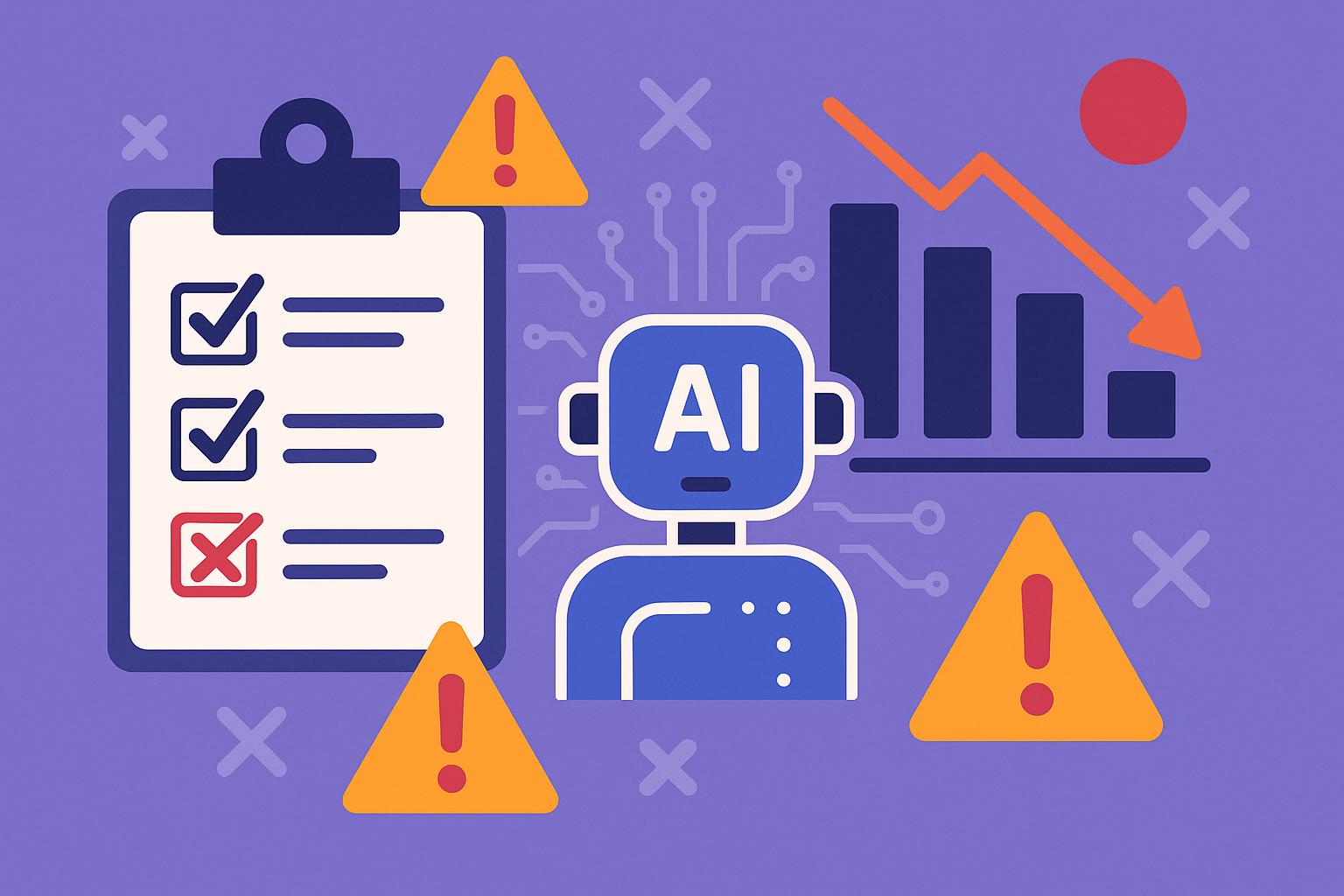
Artificial intelligence is transforming software testing. From generating test cases to analyzing defects and identifying test coverage gaps, AI-powered tools promise to reduce manual effort and accelerate delivery cycles.
As organizations rush to integrate AI into their quality assurance processes, many teams discover that adopting AI is not as simple as turning on a new tool. While AI can significantly improve efficiency, unrealistic expectations and poor implementation practices often lead to disappointing results.
Understanding the most common mistakes teams make when adopting AI for testing can help organizations maximize value while avoiding costly setbacks.
Mistake #1: Expecting AI to Replace Human Testers
One of the biggest misconceptions surrounding AI in testing is the belief that it can completely replace QA engineers.
AI excels at analyzing patterns, generating suggestions, and automating repetitive tasks. However, it lacks the business context, domain expertise, and critical thinking that human testers bring to the table.
Testing often requires understanding user behavior, evaluating usability, identifying edge cases, and making judgment calls about product quality. These responsibilities still require human involvement.
Organizations that view AI as a replacement for QA teams often end up with blind spots in their testing strategy. The most successful teams use AI as a productivity enhancer rather than a substitute for human expertise.
Mistake #2: Blindly Trusting AI-Generated Test Cases
Many modern AI tools can generate test scenarios, acceptance criteria, and automated test scripts from requirements or user stories. While this capability can save significant time, blindly accepting AI-generated outputs can introduce risks.
AI-generated test cases may:
- Miss critical business workflows
- Overlook edge cases
- Contain incorrect assumptions
- Generate redundant or low-value tests
- Misinterpret vague requirements
The quality of generated tests is heavily dependent on the quality of the inputs and the context available to the AI model.
Teams should treat AI-generated test cases as a starting point rather than a final deliverable. Every generated test should be reviewed, validated, and refined by experienced QA professionals before implementation.
Mistake #3: Ignoring AI Limitations
AI models are powerful, but they are not infallible.
Large language models can occasionally generate inaccurate information, misunderstand requirements, or confidently present incorrect recommendations. This phenomenon, often referred to as hallucination, can create significant challenges when applied to software testing.
For example, tools such as Claude can help QA engineers generate test ideas, summarize bug reports, and assist with documentation. However, human review remains essential because AI-generated outputs may contain inaccuracies or miss important context.
Teams interested in understanding both the strengths and weaknesses of AI-assisted testing can explore this guide on Claude limitations for testing, which provides practical examples of where human oversight remains critical.
The lesson is simple: trust, but verify.
Mistake #4: Failing to Validate AI Recommendations
Many AI-powered testing tools provide recommendations related to:
- Test prioritization
- Defect prediction
- Risk assessment
- Root cause analysis
- Test coverage optimization
While these recommendations can be valuable, teams sometimes implement them without validation.
AI outputs should always be measured against real-world outcomes. Organizations should establish review processes and performance metrics to evaluate whether AI recommendations actually improve quality, efficiency, or defect detection rates.
Without validation, teams risk making decisions based on flawed assumptions or incomplete data.
Mistake #5: Assuming AI Understands Your Business Domain
AI models are trained on large amounts of general information, but they do not automatically understand the unique requirements of your industry, customers, or product.
For example, testing a healthcare platform, banking application, or insurance system often requires specialized regulatory knowledge that generic AI models may not possess.
Teams frequently overestimate AI’s ability to interpret business rules correctly. As a result, generated test scenarios may fail to cover critical compliance or domain-specific requirements.
Successful AI adoption requires combining AI-generated insights with subject matter expertise from testers, business analysts, and product owners.
Mistake #6: Poor Data Quality
AI systems are only as good as the data they receive.
Organizations often train or configure AI testing solutions using incomplete, outdated, or inconsistent data sources. Poor-quality data can lead to:
- Inaccurate predictions
- Weak test recommendations
- Misleading analytics
- Reduced confidence in AI outputs
Before implementing AI-driven testing workflows, teams should ensure their requirements, defect history, test repositories, and product documentation are well-maintained and organized.
Clean data creates better outcomes.
Mistake #7: Chasing Automation Instead of Quality
AI can automate many aspects of testing, but automation alone does not guarantee better software quality.
Some organizations focus heavily on increasing the number of automated tests without considering whether those tests provide meaningful coverage.
The goal should never be automation for automation’s sake. Instead, teams should focus on delivering reliable, maintainable, and valuable testing processes that improve customer experiences and reduce production defects.
AI should support quality objectives, not replace them.
Mistake #8: Having Unrealistic Expectations About ROI
AI vendors often promote dramatic productivity gains, faster releases, and reduced testing costs. While these benefits are achievable, they rarely happen overnight.
AI adoption requires:
- Process changes
- Training and onboarding
- Workflow adjustments
- Ongoing monitoring
- Continuous improvement
Organizations expecting immediate returns may become frustrated and abandon promising initiatives too early.
Like any technology investment, AI in testing delivers the best results when approached with realistic expectations and a long-term strategy.
Best Practices for Successful AI Adoption in Testing
To maximize the value of AI while avoiding common pitfalls, organizations should:
- Treat AI as an assistant, not a replacement for QA professionals.
- Validate all AI-generated outputs before implementation.
- Continuously measure AI performance against business goals.
- Maintain high-quality test and defect data.
- Incorporate domain experts into AI-assisted workflows.
- Establish governance and review processes for AI recommendations.
- Focus on quality outcomes rather than automation metrics alone.
When combined with human expertise, AI can become a powerful accelerator for testing teams.
Final Thoughts
AI is reshaping software testing by helping teams work faster, identify risks earlier, and generate valuable insights. However, success depends on understanding both the capabilities and limitations of these technologies.
Organizations that avoid overreliance on AI, validate outputs carefully, and maintain realistic expectations are far more likely to achieve sustainable improvements in software quality.
As AI continues to evolve, QA professionals should focus not only on how AI impacts testing but also on how it transforms other industries and workflows. For broader perspectives on artificial intelligence trends, innovations, and practical applications across multiple categories, NeuroBits AI provides valuable insights into the rapidly changing AI landscape.