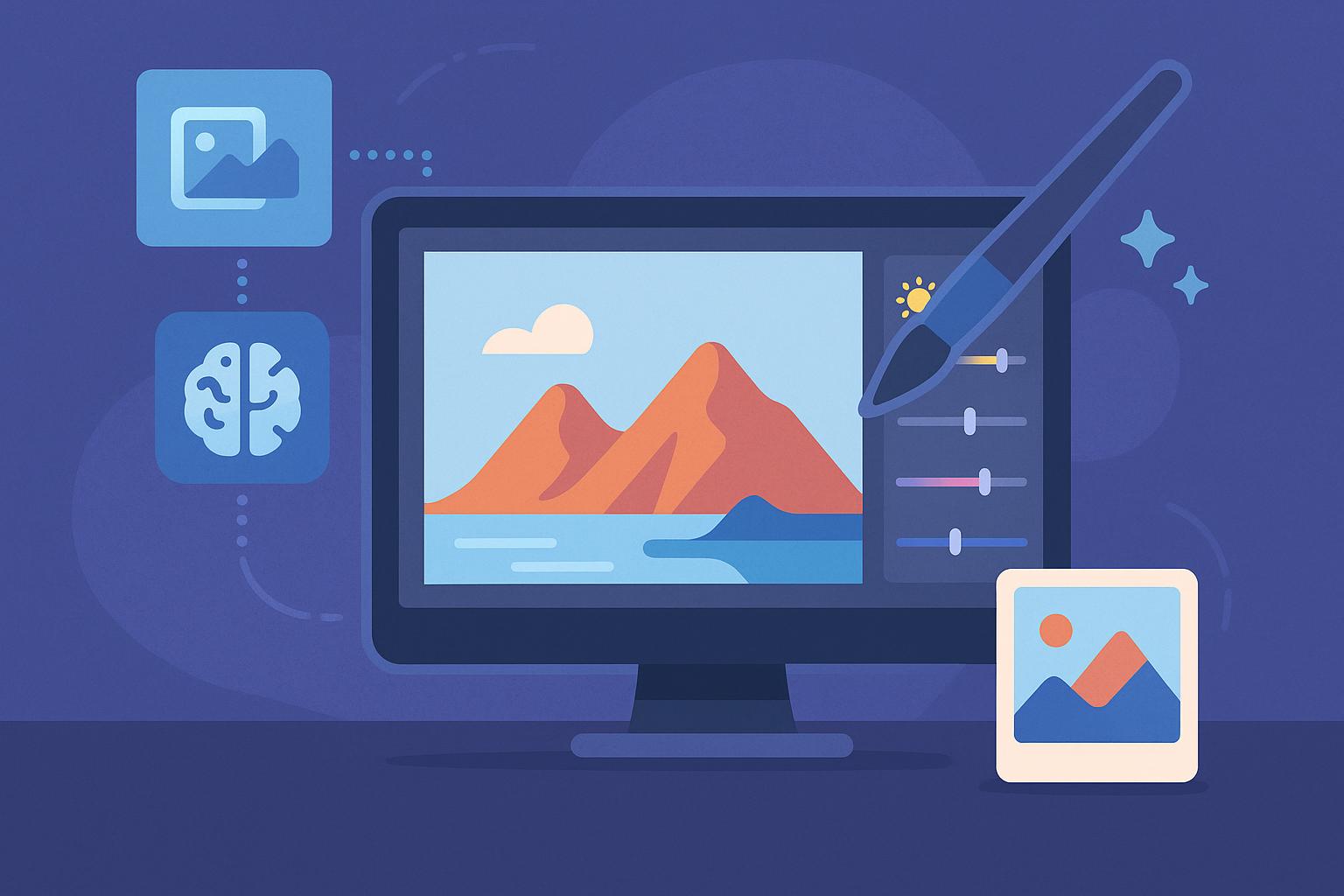
Photo editing has traditionally required a combination of technical knowledge, specialized software, and considerable time. Adjusting lighting, removing unwanted objects, changing backgrounds, or creating a polished composition could involve multiple editing tools and complicated workflows. Today, artificial intelligence is changing that process by allowing users to make sophisticated edits through simple instructions.
Modern AI photo editing tools can understand images, interpret natural-language prompts, and automatically perform a range of creative adjustments. This development is making advanced editing techniques accessible to photographers, marketers, content creators, businesses, and casual users alike.
What Is AI-Powered Photo Editing?
AI photo editing uses machine learning and computer vision technologies to analyze and manipulate visual content. Instead of requiring users to manually select every object or adjust individual settings, an AI system can identify elements within an image and apply changes based on a user’s instructions.
For example, a person might want to remove an object from a photograph, replace a background, improve lighting, or create a different visual style. Traditional editing software may require several steps to accomplish these tasks, while AI-assisted tools can simplify the process.
The technology is particularly useful when speed and experimentation are important. Users can test different ideas without rebuilding an image from scratch each time.
Understanding the Nano Banana 2.5 Photo Editing Tool
One example of the growing interest in AI-powered visual creation is the Nano Banana 2.5 photo editing tool. Tools built around modern generative AI demonstrate how image editing can move beyond traditional sliders, filters, and manual selections.
Rather than treating an image as a collection of individual settings, generative editing allows users to communicate the desired result more naturally. This can make the creative process easier for people who may not have extensive experience with professional editing software.
The technology can also encourage experimentation. A creator can explore different visual concepts, compare variations, and decide which direction works best for the intended audience.
Common Uses of AI Photo Editing
AI-assisted photo editing has applications across many industries. Social media creators can use AI to develop visuals for posts, advertisements, and campaigns. Since social platforms often require a steady supply of new content, faster editing can help creators maintain a consistent publishing schedule.
E-commerce businesses can also benefit from automated image editing. Product photographs may need different backgrounds, compositions, or promotional treatments depending on where they are published. AI can help create variations while reducing repetitive manual work.
Bloggers and publishers can use AI-generated or enhanced imagery to complement articles. Instead of relying entirely on generic stock images, they can explore visuals that more closely match the subject and tone of their content.
Photographers can also use AI as an additional editing assistant. While professional photographers may still prefer detailed manual control for final work, AI can help with repetitive adjustments and early-stage experimentation.
Natural-Language Editing
One of the most significant changes introduced by generative AI is the ability to describe an intended edit using ordinary language.
Instead of navigating through several menus, a user might describe a desired change in a sentence. The AI then attempts to interpret the instruction and apply an appropriate modification.
This approach lowers the technical barrier to image editing. Someone without extensive experience in layers, masks, selections, and adjustment panels can still experiment with sophisticated visual transformations.
However, good results often depend on how clearly the instruction is written. Specific prompts can provide more useful information about the desired subject, setting, lighting, composition, and style.
Why Prompt Quality Matters
Generative AI does not always interpret vague instructions exactly as the user expects. A simple prompt such as “make this better” leaves considerable room for interpretation.
More descriptive instructions can produce more predictable results. Users may specify the type of lighting, background, perspective, colors, mood, or other visual characteristics they want.
Learning how to communicate visual ideas effectively is therefore becoming an important part of AI-assisted creativity. Prompt writing is not necessarily about using complicated language. Instead, it is about providing relevant details and clearly defining the intended result.
Benefits for Content Creators
Speed is one of the biggest advantages of AI photo editing. A creator can generate and test multiple concepts without spending the same amount of time on each version.
AI tools can also support creative exploration. A single photograph can become the starting point for several different concepts, allowing users to compare styles and compositions before deciding on a final direction.
Another advantage is accessibility. Professional editing applications can have steep learning curves, whereas AI-powered interfaces can make certain advanced tasks easier for beginners.
At the same time, AI should be viewed as an assistant rather than an automatic replacement for creative judgment. Human review remains important because generated results may contain unexpected details or inconsistencies.
Responsible Use of AI-Edited Images
As AI image technology becomes more capable, responsible use is increasingly important. Creators should consider whether an edited image could mislead viewers, especially when photographs are presented as realistic representations of real events or people.
For commercial projects, users should also understand the relevant usage rights and terms associated with the tools and source materials they use. Maintaining transparency can help audiences distinguish creative edits from documentary photography when that distinction matters.
The Future of AI Photo Editing
AI photo editing is likely to become more integrated into everyday creative workflows. Future systems may offer greater control over individual objects, improved consistency between edits, better preservation of important image details, and more sophisticated understanding of complex instructions.
The broader trend is clear: image editing is moving toward more intuitive interactions. Instead of requiring users to master every technical control, AI can handle portions of the mechanical work while people concentrate on creative decisions.
For photographers, marketers, businesses, and everyday creators, this shift opens new possibilities. The most effective workflows will likely combine artificial intelligence with human creativity, allowing technology to accelerate production without removing the judgment and originality that make visual content meaningful.